FTTA Solution
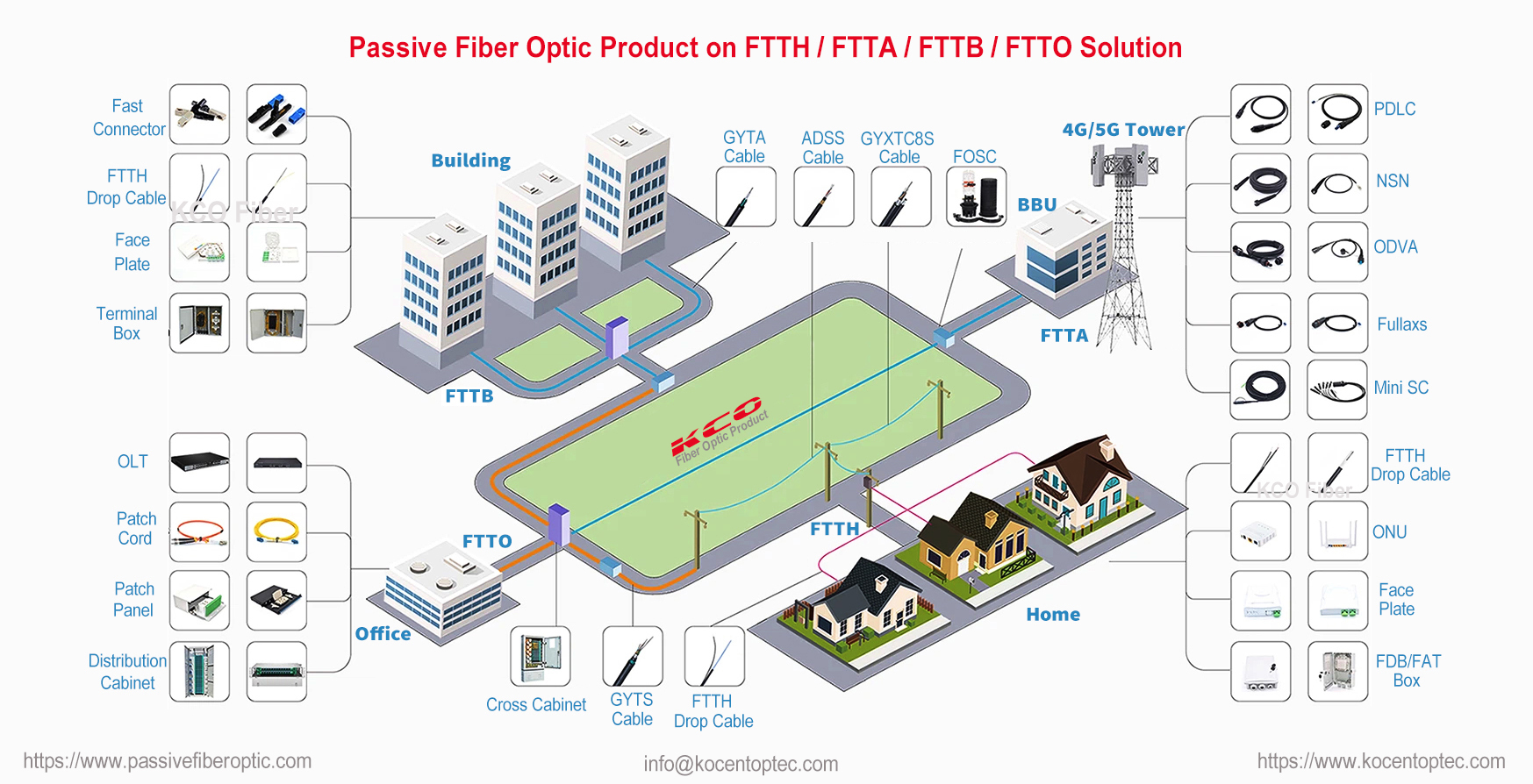
FTTA product:
- Fiber Optic Cable (ADSS Cable, ASU Cable, FTTH Cale, Field Fiber Cable, etc).
- CPRI Fiber Optic Pach Cord, FullAxs Cable, ODVA Cable, Nokia NSN cable, etc.
- Outdoor Fiber Optic Pigtail.
- Water-proof Fast Connector.
- Outdoor Multi-function Fiber Optic Box.
- Optical Fiber PLC Splitter.
- Outdoor Fiber Optic Distribution Box.
- Outdoor Fiber Optic Splice Enclosure Box.
- Fiber Optic Components.
- SFP, QSFP.
- DAC, AOC.

What is FTTA Solution?
- FTTA (Fiber to the Antenna) is a cellular telecommunication network architecture that runs fiber optic cables directly up cell towers to connect baseband units at the ground with remote radio heads (RRHs) near the antennas. It replaces traditional, heavy copper coaxial cables to drastically reduce signal loss, increase bandwidth, and support 4G and 5G speeds.
- A standard FTTA deployment physically separates processing and radio units to optimize signal integrity and reduce tower load:
+ Baseband Unit (BBU): Located at the base of the tower in a protected cabinet. It processes digital data and handles baseband functions.
+ Remote Radio Head (RRH / RRU): Mounted high up the tower, directly adjacent to the antennas. It converts the digital signals from the BBU into the analog radio frequency (RF) signals transmitted to mobile devices.
+ CPRI Fiber Optic Cable Link: The Common Public Radio Interface (CPRI) standard protocol dictates how the BBU and RRH communicate over fiber.
+ Hybrid Cables: Instead of running separate fiber for data and copper for power, FTTA commonly uses armored hybrid cables that bundle both in a single weather-resistant jacket, saving significant space and weight.
+ Distribution Box: Installed at the top of the tower, this box splits the hybrid trunk cable, routing the fiber to the RRHs and connecting the DC power supply.